Table of ContentsNot known Facts About What Is Derivative N FinanceThe Of What Is Derivative In FinanceThe Ultimate Guide To What Is Considered A "Derivative Work" Finance DataThe Only Guide for What Is Derivative Instruments In FinanceThe Buzz on What Do You Learn In A Finance Derivative ClassMore About What Is A Derivative Finance
A derivative is a monetary agreement that derives its worth from an hidden property. The buyer agrees to acquire the asset on a specific date at a specific price. Derivatives are typically used for products, such as oil, gasoline, or gold. Another asset class is currencies, often the U.S. dollar.
Still others use rate of interest, such as the yield on the 10-year Treasury note. The agreement's seller does not need to own the underlying possession. He can meet the agreement by giving the buyer adequate money to buy the property at the prevailing rate. He can also give the purchaser another derivative agreement that offsets the worth of the very first.
In 2017, 25 billion derivative contracts were traded. Trading activity in interest rate futures and choices increased in North America and Europe thanks to greater interest rates. Trading in Asia declined due to a decline in product futures in China. These agreements were worth around $532 trillion. Most of the world's 500 largest companies use derivatives to lower threat.
In this manner the business is safeguarded if prices increase. Companies also compose agreements to protect themselves from changes in currency exchange rate and rate of interest. Derivatives make future money streams more predictable. They enable companies to forecast their profits more properly. That predictability increases stock rates. Businesses then require less money on hand to cover emergencies.
Most derivatives trading is done by hedge funds and other financiers to get more utilize. Derivatives only need a little deposit, called "paying on margin." Many derivatives contracts are offset, or liquidated, by another derivative before pertaining to term. These traders do not worry about having sufficient money to settle the derivative if the market goes versus them.
Derivatives that are traded in between 2 companies or traders that know each other personally are called "over-the-counter" choices. They are also traded through an intermediary, generally a large bank. A little percentage of the world's derivatives are traded on exchanges. These public exchanges set standardized contract terms. They specify the premiums or discounts on the agreement price.
What Is Derivative N Finance Things To Know Before You Get This

It makes them more or less exchangeable, thus making them better for hedging. Exchanges can likewise be a clearinghouse, serving as the real purchaser or seller of the derivative. That makes it much safer for traders since they understand the agreement will be satisfied. In 2010, the Dodd-Frank Wall Street Reform Act was signed in reaction to the financial crisis and to avoid extreme risk-taking.
It's the merger in between the Chicago Board of Trade and the Chicago Mercantile Exchange, also called CME or the Merc. It trades derivatives in all property classes. Stock choices are traded on the NASDAQ or the Chicago Board Options Exchange. Futures contracts are traded on the Intercontinental Exchange. It acquired the New york city Board of Sell 2007.
The Product Futures Trading Commission or the Securities and Exchange Commission manages these exchanges. Trading Organizations, Cleaning Organizations, and SEC Self-Regulating Organizations have a list of exchanges. The most notorious derivatives are collateralized financial obligation obligations. CDOs were a main reason for the 2008 monetary crisis. These bundle financial obligation like car loans, charge card debt, or home mortgages into a security.
There are two significant types. Asset-backed industrial paper is based on corporate and organisation financial obligation. Mortgage-backed securities are based upon home loans. When the real estate market collapsed in 2006, so did the worth of the MBS and after that the ABCP. The most typical type of derivative is a swap. It is an arrangement to exchange one possession or debt for a similar one.
The majority of them are either currency swaps or interest rate swaps. For instance, a trader may sell stock in the United States and buy it in a foreign currency to hedge currency risk. These are OTC, so these are not traded on an exchange. A business might swap the fixed-rate voucher stream of a bond for a variable-rate payment stream of another business's bond.
They also assisted trigger the 2008 financial crisis. They were sold to insure versus the default of local bonds, business financial obligation, or mortgage-backed securities. When the MBS market collapsed, there wasn't enough capital to pay off the CDS holders. The federal government had to nationalize the American International Group. Thanks to Dodd-Frank, swaps are now controlled by the CFTC.
Fascination About What Is A Derivative In Finance
They are agreements to purchase or sell a property at an agreed-upon price at a specific date in the future. The two parties can tailor their forward a lot. Forwards are utilized to hedge risk in commodities, rates of interest, currency exchange rate, or equities. Another influential type of derivative is a futures contract.
Of these, the most essential are oil price futures. They set the price of oil and, ultimately, gas. Another kind of acquired simply provides the buyer the alternative to either buy or offer the possession at a certain rate and date. Derivatives have 4 big threats. The most harmful is that it's practically impossible to know any derivative's real worth.
Their complexity makes them tough to price. That's the factor mortgage-backed securities were so deadly to the economy. No one, not even the computer system developers who created them, understood what their cost was when housing prices dropped. Banks had actually become reluctant to trade them since they could not value them. Another threat is also one of the things that makes them so attractive: leverage.
If the value of the underlying property drops, they should include cash to the margin account to maintain that percentage until the agreement ends or is balanced out. If the product cost keeps dropping, covering the margin account can lead to huge losses. The U.S. Commodity Futures Trading Commission Education Center supplies a great deal of details about derivatives.
It's something to wager that gas costs will go up. It's another thing completely to attempt to predict precisely when that will happen. Nobody who purchased MBS thought real estate rates would drop. The last time they did was the Great Depression. They also believed they were safeguarded by CDS.
Moreover, they were uncontrolled and not offered on exchanges. That's a danger distinct to OTC derivatives. Finally is the capacity for scams. Bernie Madoff built his Ponzi scheme on derivatives. Fraud is rampant in the derivatives market. The CFTC advisory lists the most recent scams in products futures.
The Ultimate Guide To What Finance Derivative
A acquired is an https://zenwriting.net/personpg0x/b-table-of-contents-b-a-p3w9 agreement in between two or more celebrations whose worth is based upon an agreed-upon underlying financial possession (like a security) or set of properties (like an index). Common underlying instruments include bonds, products, currencies, interest rates, market indexes, and stocks (what is a derivative finance baby terms). Typically belonging to the world of innovative investing, derivatives are secondary securities whose value is entirely based (derived) on the worth of the main security that they are linked to.
Futures agreements, forward agreements, options, swaps, and warrants are typically used derivatives. A futures agreement, for example, is a derivative because its worth is affected by the efficiency of the hidden asset. Likewise, a stock alternative is a derivative due to the fact that its worth is "derived" from that of the underlying stock. Choices are of 2 types: Call and Put. A call option offers the option holder right to purchase the underlying possession at workout or strike cost. A put choice offers the option holder right to sell the hidden property at exercise or strike cost. Alternatives where the underlying is not a physical asset or a stock, however the rates of interest.
Even more forward rate contract can also be gotten in upon. Warrants are the choices which have a maturity duration of more than one year and hence, are called long-dated options. These are mostly OTC derivatives. Convertible bonds are the type of contingent claims that offers the bondholder an alternative to take part in the capital gains caused by the upward movement in the stock cost of the business, with no responsibility to share the losses.
Asset-backed securities are also a type of contingent claim as they include an optional feature, which is the prepayment option available to the possession owners. A type of alternatives that are based upon the futures agreements. These are the innovative versions of the basic choices, having more complicated features. In addition to the categorization of derivatives on the basis of rewards, they are likewise sub-divided on the basis of their hidden asset.
Equity derivatives, weather derivatives, rates of interest derivatives, commodity derivatives, exchange derivatives, and so on are the most popular ones that derive their name from the asset they are based on. There are likewise credit derivatives where the underlying is the credit danger of the financier or the government. Derivatives take their inspiration from the history of mankind.
Likewise, financial derivatives have also end up being more vital and complex to perform smooth financial deals. This makes it important to comprehend the standard attributes and the kind of derivatives available to the players in the financial market. Research study Session 17, Discover more here CFA Level 1 Volume 6 Derivatives and Alternative Investments, 7th Edition.
The smart Trick of Finance What Is A Derivative That Nobody is Talking About
There's an universe of investing that goes far beyond the realm of simple stocks and bonds. Derivatives are another, albeit more complicated, way to invest. A derivative is an agreement between two celebrations whose value is based upon, or originated from, a specified underlying property or stream of capital.
An oil futures contract, for instance, is a derivative because its worth is based on the marketplace value of oil, the underlying product. While some derivatives are traded on major exchanges and go through regulation by the Securities and Exchange Commission (SEC), others are traded over the counter, or independently, rather than on a public exchange.
With a derivative financial investment, the investor does not own the hidden asset, however rather is banking on whether its worth will increase or down. Derivatives normally serve among 3 purposes for financiers: hedging, leveraging, or speculating. Hedging is a strategy that includes utilizing particular financial investments to offset the danger of other financial investments (what is a derivative in finance).
In this manner, if the price falls, you're rather safeguarded because you have the option to sell it. Leveraging is a technique for amplifying gains by taking on debt to acquire more possessions. If you own choices whose underlying assets increase in value, your gains could outweigh the costs of obtaining to make the financial investment.
You can utilize choices, which provide you the right to purchase or offer assets at fixed rates, to generate income when such properties increase or down in worth. Choices are agreements that give the holder the right (though not the responsibility) to purchase or sell an underlying asset at a preset cost on or prior to a defined date (what is a derivative in.com finance).
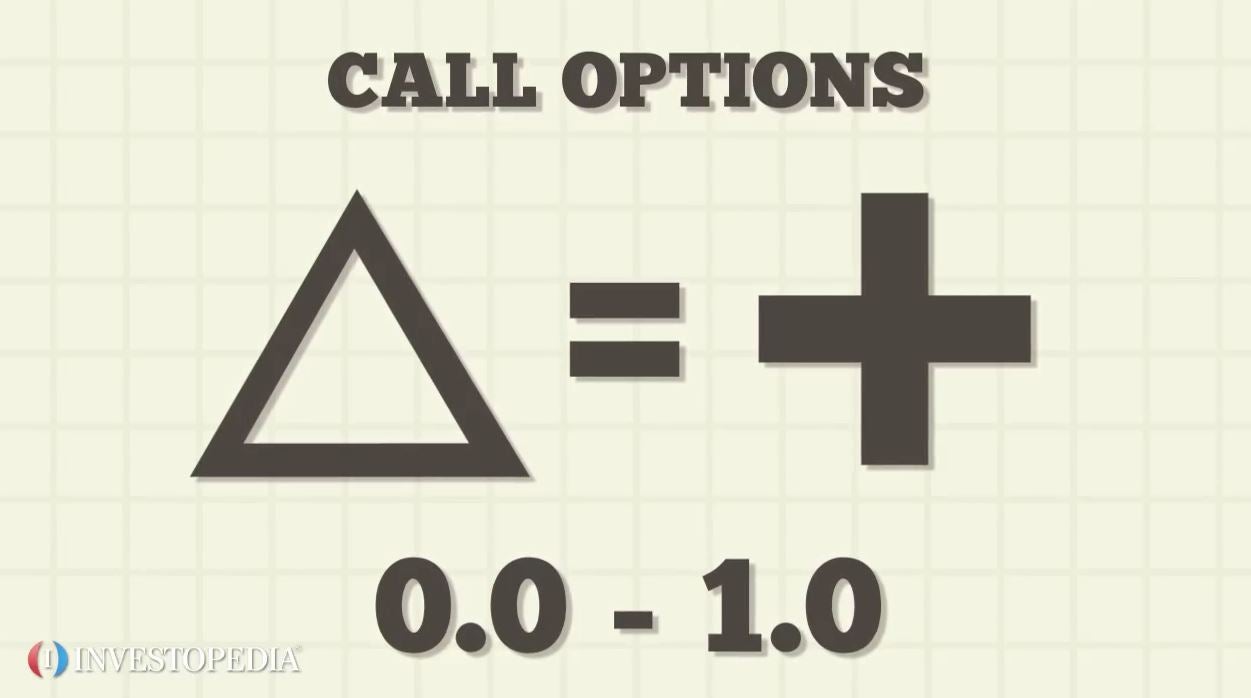
If you buy a put choice, you'll desire the rate of the underlying possession to fall prior to the alternative expires. A call option, meanwhile, offers the holder the right to purchase a possession at a predetermined cost. A call option is comparable to having a long position on a stock, and if you hold a call alternative, you'll hope that the cost of the hidden possession boosts before the option ends.
Not known Incorrect Statements About What Is Derivative N Finance
Swaps can be based on interest rates, foreign currency exchange rates, and products rates. Typically, at the time a swap contract is started, at least one set of money flows is based on a variable, such as rates of interest or foreign exchange rate changes. Futures agreements are contracts in between 2 parties where they accept buy or sell certain properties at an established time in the future.